What is it?
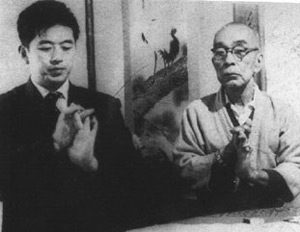
The Bujinkan Budō Taijutsu organisation was created in 1972 by Hatsumi Masaaki Sōke (b.1931 – ) to spread the training and lessons of the nine schools (kyū ryūha) of martial arts which had been passed down to him from Takamatsu Toshitsugu Sōke (b. 1889 – d. 1972).
Bujinkan Budō Taijutsu has often been described as a complete martial art, combining many elements found within other martial arts under one system.
For example, there is Kotō Ryū Koppōjutsu which has been described as the Bujikan’s version of Karate. Hard-hitting and short. As well as Takagi Yōshin Ryū which is said to be a branch of one of the schools which helped to inspire and develop Aikidō.
Under the umbrella of the Bujinkan Budō Taijutsu, there are many skills that are taught, learnt, and studied. These include:
Taijutsu
Taijutsu is made up of the miriade of “empty-handed” techniques which are found within the different schools. Taijutsu translates to body (tai) art (jutsu), meaning to use the body.
Within Taijutsu there are several sub-categories that are found within the Bujinkan organisation:
– Dakentaijutsu
– Jūtaijutsu
– Koppōjutsu
– Koshijutsu
Working on taijutsu allows the individual practitioner to become better in all areas of their martial arts.
Bukijutsu
Bukijutsu is a catch-all term for all variety of buki (weapons) within Japanese martial arts.
Within the Bujinkan organisation there are many weapons that are utilised:
– Rokushakubō (6-foot staff)
– Jō (4-foot staff)
– Hanbō (3-foot staff)
– Daitō/Ken (primary sword)
– Shōtō (short sword)
– Tantō (knife)
– Jutte (metal truncheon)
– Yari (spear)
– Nawa/Hojō (rope)
– Shuko (iron claws)
There are also many more that have been trained within the Bujinkan. Hatsumi Sōke once talked about how all weapons are similar, once you begin learning them you should be able to pick up any others and use them effectively.
To learn more about the individual kyū ryūha, and the corresponding Sōke, click here to go to the The Nine Schools and the Sōke of the Bujinkan page.
 Bujinkan Budō Taijutsu Kaeru Dōjō